





Angels.love - Ashby Winter- Blu Chanelle - Love...

Angels.Love - Ashby Winter- Blu Chanelle - Love...

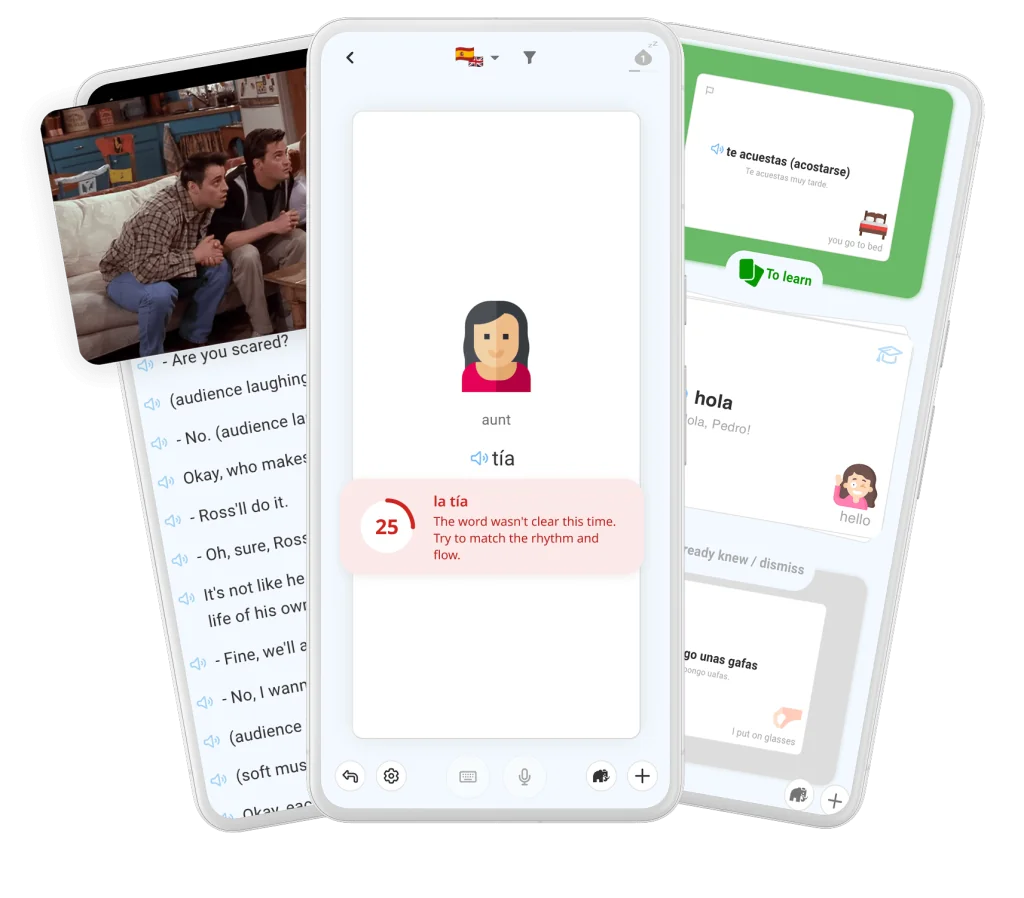
Learn a language using flashcards

Save the words from everywhere

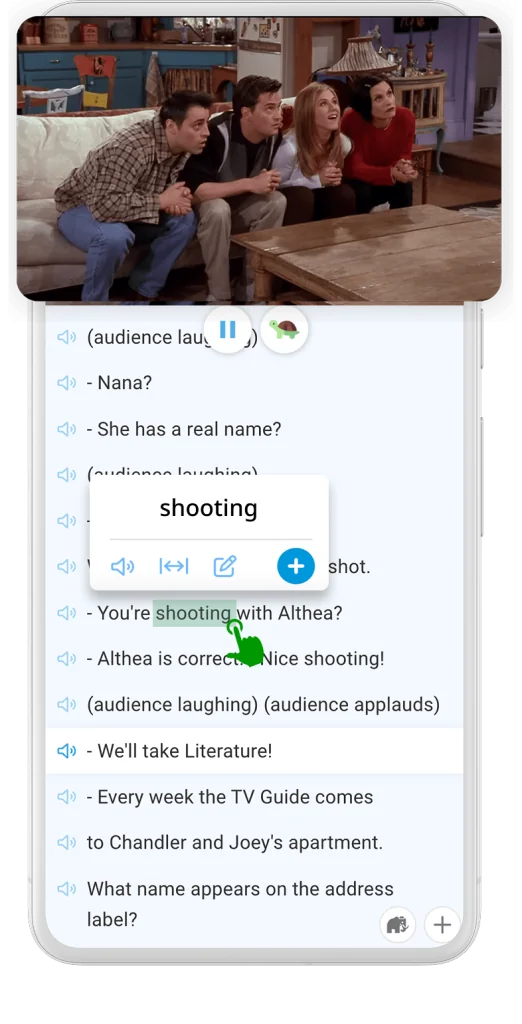
Learn by watching videos and movies

Use integrated translator

What users say about our app

Joseph

I love the way you guys put an amazing effort into helping people who want to learn new languages, it’s seriously one of the best apps I have ever used. Thank you so much!

Nina

Thanks for such a great app!

For me, it’s super cool and convenient for learning languages.

I also shared it with my friends and they are no less satisfied 

Radim

Great app, simply the best of the best, and you can immediately translate the movie and click on the word, the translator is super, and words are easy to learn + that you can learn two different languages, thank you very much.

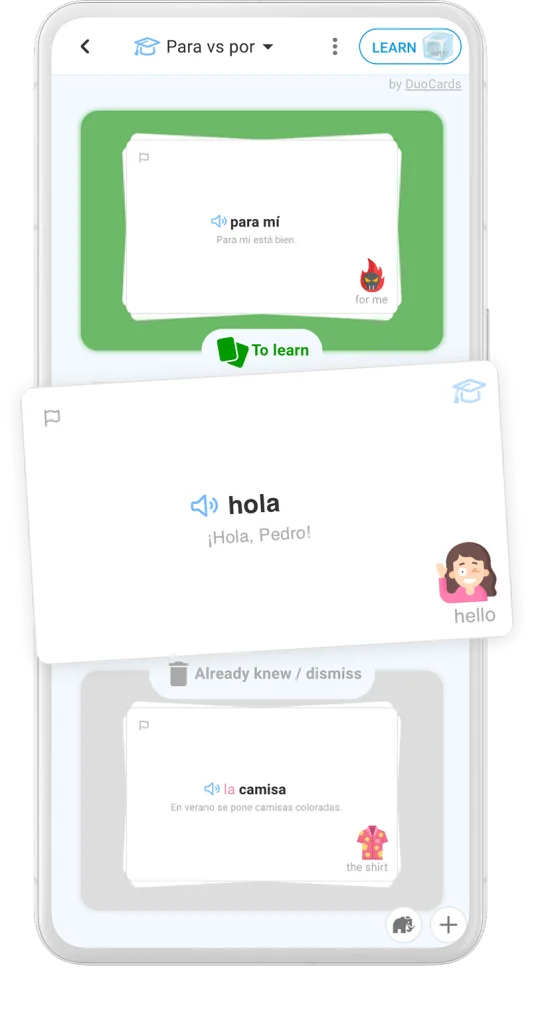
Study new words and phrases you pick from thematic sets of cards

These sets are created by the community, reviewed by us and sorted by popularity. Teachers can easily create public or private sets.

Angels.Love - Ashby Winter- Blu Chanelle - Love...

Learn any foreign language by watching videos and reading articles

And saving new words and phrases as flashcards.

Angels.Love - Ashby Winter- Blu Chanelle - Love...

Study new words and phrases you pick from thematic sets of cards

These sets are created by the community, reviewed by us and sorted by popularity. Teachers can easily create public or private sets.

Angels.Love - Ashby Winter- Blu Chanelle - Love...

Blog

Angels.love - Ashby Winter- Blu Chanelle - Love...

"Angels.Love" is a delicate, emotionally textured collaboration that foregrounds intimacy and yearning without tipping into sentimentality. From the opening moments, the track sets a mood of nocturnal reflection: minor-key harmonies and sparse, breathy production create a space where two distinct voices negotiate closeness and distance.

Lyrically, "Love..." (with its ellipsis) embraces uncertainty. The text resists tidy metaphors in favor of fragments and sensory cues, which better reflect the diffuse quality of modern intimacy. Lines read less like declarations and more like snapshots: moments that gesture toward a whole relationship without ever summing it up. This compositional choice honors the complexity of lingering attachment—rarely heroic, rarely fully explained, often stubbornly ordinary. Angels.Love - Ashby Winter- Blu Chanelle - Love...

Blu Chanelle complements this with a warmer timbre and an approach that balances vulnerability and poise. Her lines offer emotional anchoring: where Winter hints, Chanelle solidifies, turning elliptical imagery into a handful of tactile moments—late-night cigarette light, a sweater left behind, the ghost of a perfume. Their interplay is the song’s strongest dramaturgical engine; the two voices rarely compete for the same emotional register, instead mapping adjacent territories of desire and regret. Harmonies are used sparingly but effectively, adding a chorus-like resonance at key turns without diluting the song’s intimate focus. "Angels

One of the song’s subtle achievements is its refusal to moralize. Infidelity, distance, longing—these themes surface without being framed as problems to solve. Instead, they become atmosphere: inevitable elements in a late-night landscape. That neutrality can be disquieting; the track’s emotional restraint risks being read as emotional detachment. Yet, within the song’s logic, that reticence is expressive rather than evasive—an honest depiction of how people sometimes feel when words fail to contain what they’ve lived. The text resists tidy metaphors in favor of

If the record has a weakness, it may be its repetition of mood. The same hushed palette that so powerfully communicates intimacy can, over the course of the track, flatten dynamics; listeners seeking catharsis or dramatic escalation may find the climax understated. A slightly bolder bridge or a more pronounced harmonic shift might have heightened emotional payoff without betraying the song’s essential modesty.

Ashby Winter’s delivery is intimate and restrained, favoring subtle inflections over vocal acrobatics. This restraint functions as a dramaturgical choice: instead of declaring feeling, Winter inhabits it, letting phrases trail and colors shift in ways that suggest memory rather than proclamation. The phrasing often lands slightly behind the beat, producing a conversational cadence that reads as confessional—someone speaking softly into a pillow.


Angels.Love - Ashby Winter- Blu Chanelle - Love...

Browse our library of study sets, videos and articles

"Angels.Love" is a delicate, emotionally textured collaboration that foregrounds intimacy and yearning without tipping into sentimentality. From the opening moments, the track sets a mood of nocturnal reflection: minor-key harmonies and sparse, breathy production create a space where two distinct voices negotiate closeness and distance.

Lyrically, "Love..." (with its ellipsis) embraces uncertainty. The text resists tidy metaphors in favor of fragments and sensory cues, which better reflect the diffuse quality of modern intimacy. Lines read less like declarations and more like snapshots: moments that gesture toward a whole relationship without ever summing it up. This compositional choice honors the complexity of lingering attachment—rarely heroic, rarely fully explained, often stubbornly ordinary.

Blu Chanelle complements this with a warmer timbre and an approach that balances vulnerability and poise. Her lines offer emotional anchoring: where Winter hints, Chanelle solidifies, turning elliptical imagery into a handful of tactile moments—late-night cigarette light, a sweater left behind, the ghost of a perfume. Their interplay is the song’s strongest dramaturgical engine; the two voices rarely compete for the same emotional register, instead mapping adjacent territories of desire and regret. Harmonies are used sparingly but effectively, adding a chorus-like resonance at key turns without diluting the song’s intimate focus.

One of the song’s subtle achievements is its refusal to moralize. Infidelity, distance, longing—these themes surface without being framed as problems to solve. Instead, they become atmosphere: inevitable elements in a late-night landscape. That neutrality can be disquieting; the track’s emotional restraint risks being read as emotional detachment. Yet, within the song’s logic, that reticence is expressive rather than evasive—an honest depiction of how people sometimes feel when words fail to contain what they’ve lived.

If the record has a weakness, it may be its repetition of mood. The same hushed palette that so powerfully communicates intimacy can, over the course of the track, flatten dynamics; listeners seeking catharsis or dramatic escalation may find the climax understated. A slightly bolder bridge or a more pronounced harmonic shift might have heightened emotional payoff without betraying the song’s essential modesty.

Ashby Winter’s delivery is intimate and restrained, favoring subtle inflections over vocal acrobatics. This restraint functions as a dramaturgical choice: instead of declaring feeling, Winter inhabits it, letting phrases trail and colors shift in ways that suggest memory rather than proclamation. The phrasing often lands slightly behind the beat, producing a conversational cadence that reads as confessional—someone speaking softly into a pillow.